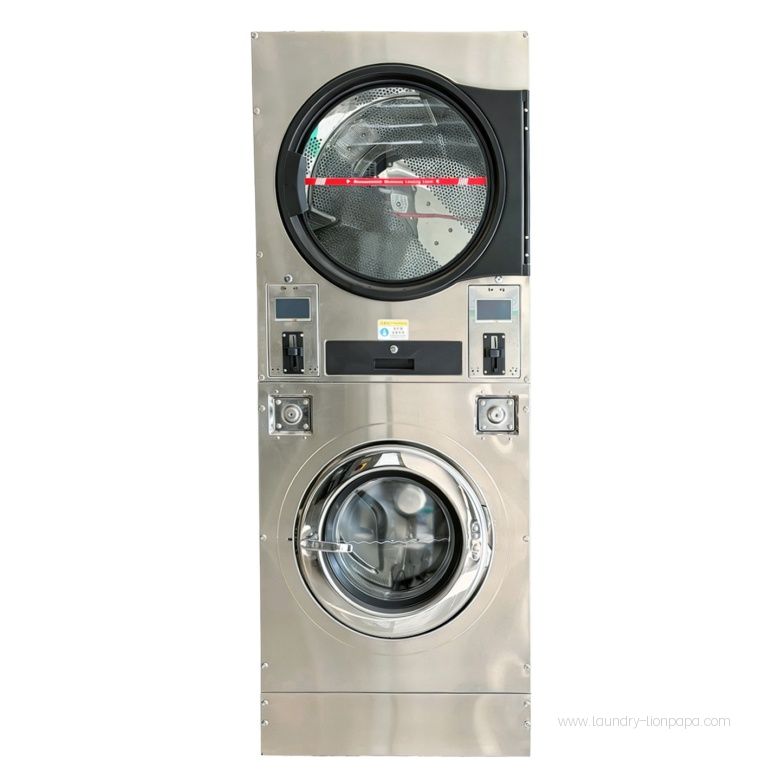
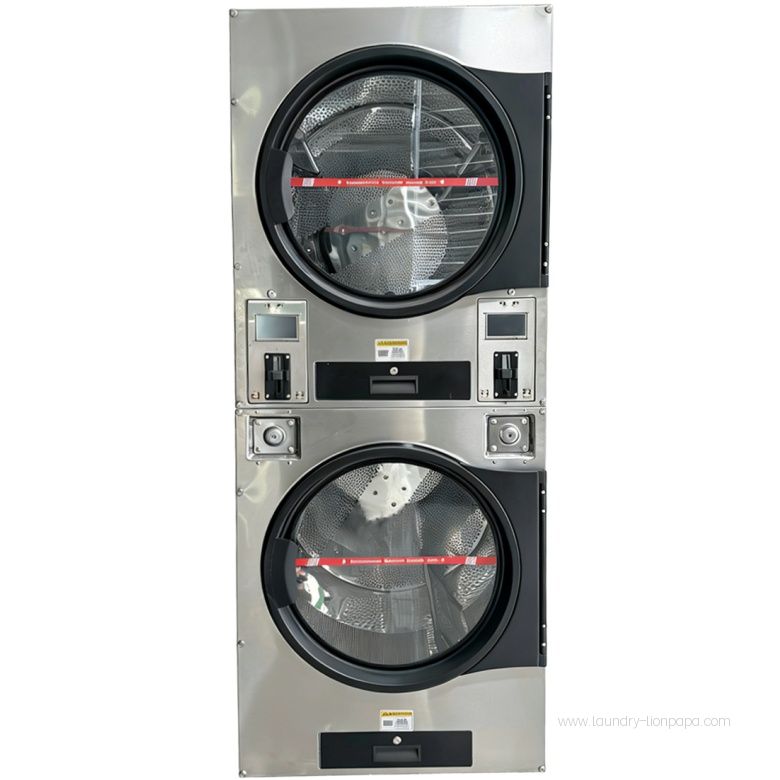
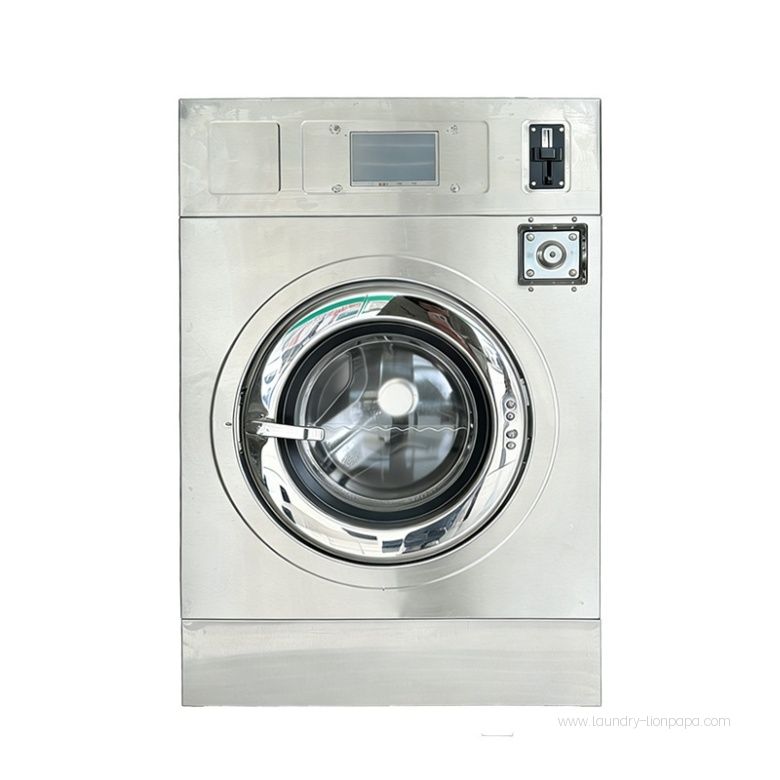
Space optimization represents a critical challenge for many laundromat operators, particularly in urban locations where real estate costs consume substantial portions of operational budgets. Stack washer-dryer combinations offer an elegant solution that maximizes revenue-generating capacity within limited floor space.
Space Efficiency Advantages
Stack washer-dryer units occupy approximately half the floor space of separate washer and dryer installations. This configuration allows operators to double their equipment capacity without expanding facility footprint. In markets where rent represents a significant operational expense, this space efficiency directly improves profit margins and return on investment.
Vertical stacking also creates more efficient customer flow patterns. Customers can transfer loads directly from washer to dryer without moving between different areas of the facility. This convenience improves customer experience and reduces congestion during peak usage periods.
Operational Benefits
Integrated control systems in stack units often provide synchronized operation between washer and dryer components. This coordination allows for optimized wash-to-dry transitions, reducing total cycle time and improving customer throughput. Some advanced models feature programmable presets that automatically adjust dryer settings based on wash cycle selection.
Utility connections for stack units typically require only single sets of electrical, water, and drainage infrastructure. This consolidation reduces installation complexity and costs compared to separate machine installations. Shared venting systems for dryer components further simplify installation requirements.
Revenue Generation Potential
Higher equipment density enabled by stack units directly increases revenue potential per square foot of facility space. Operators can offer greater variety of machine capacities and cycle options within the same footprint, appealing to diverse customer segments and usage patterns.
Premium pricing for stack units reflects their convenience and efficiency advantages. Customers value the time savings and reduced handling of wet laundry between machines. Many operators report higher utilization rates for stack units compared to separate machines, particularly during peak hours.
Installation Considerations
Structural requirements for stack units differ from separate machine installations. Combined weight of stacked machines requires adequate floor load capacity. Wall anchoring or additional structural support may be necessary for safe installation, particularly in older buildings or upper-floor locations.
Electrical requirements for stack units must account for simultaneous washer and dryer operation. Adequate circuit capacity prevents tripping breakers during peak usage. Some installations benefit from dedicated electrical panels for laundry equipment to ensure reliable operation and simplify maintenance.
Maintenance Accessibility
Service access for stack units requires consideration during layout planning. Adequate clearance around units facilitates maintenance and repair activities. Some models feature front-access service panels that simplify routine maintenance without requiring unit relocation.
Component sharing between washer and dryer sections can affect maintenance complexity. Integrated control systems may require specialized diagnostic equipment and trained technicians. Establishing relationships with qualified service providers ensures prompt resolution of equipment issues.