Selecting appropriate dryers for laundromat operations requires understanding performance characteristics, efficiency features, and operational requirements. Proper dryer selection ensures customer satisfaction while optimizing energy consumption and operating costs.
Heating System Options
Electric dryers offer straightforward installation and consistent performance. Electric heating elements provide reliable heat without gas line requirements. Operating costs depend on local electricity rates, which vary significantly by region and time of use.
Gas dryers typically offer lower operating costs in areas with affordable natural gas. Gas heating provides rapid temperature response and efficient heat transfer. Installation requires proper gas line sizing, ventilation, and safety systems. Propane options serve areas without natural gas service.
Capacity and Configuration
Dryer capacity should match washer capacity to prevent bottlenecks. Industry standards suggest 1.5 to 2 dryers per washer to accommodate longer drying cycles. Double-tub dryers provide additional capacity within limited floor space.
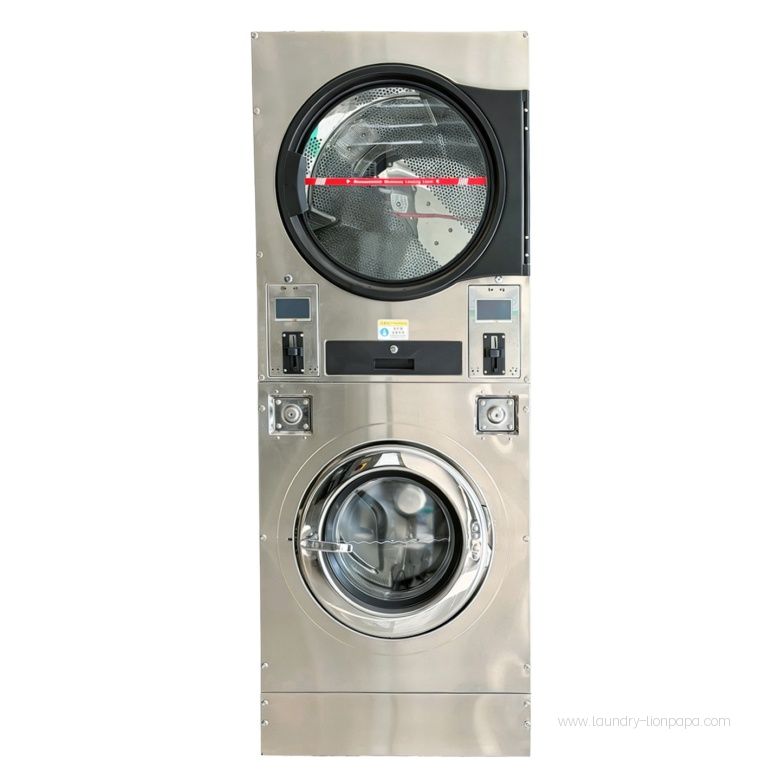
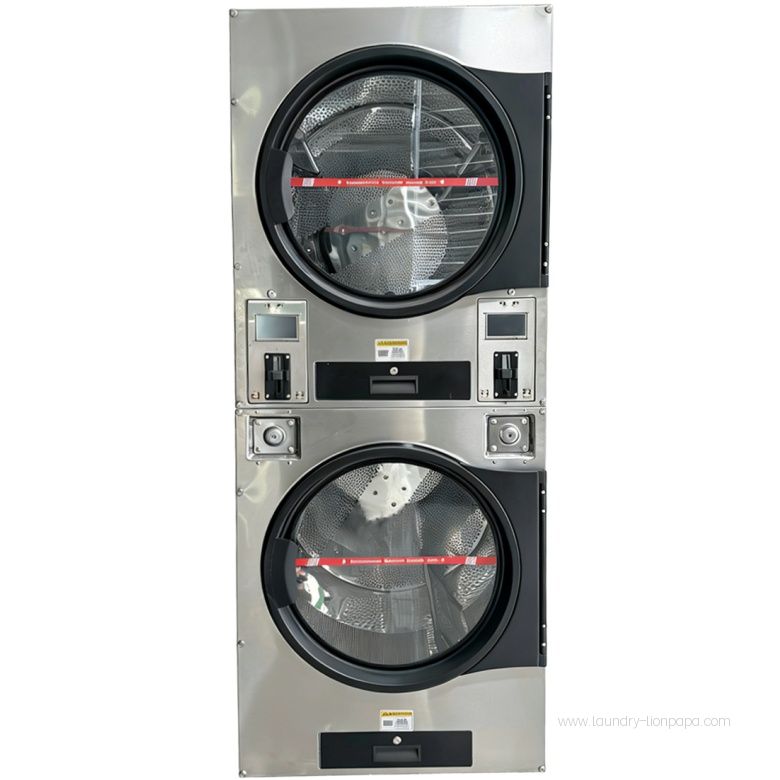
Stack dryer configurations maximize capacity in space-constrained facilities. Single-unit stack designs simplify installation and maintenance. Separate stacked units offer flexibility for different capacity combinations and independent operation.
Control Systems and Features
Digital control systems offer precise temperature and time settings for different fabric types. Programmable presets simplify customer operation and ensure appropriate settings for common load types. Moisture sensors automatically adjust drying time based on load dryness.
Coin mechanism integration varies between models. Some dryers use time-based pricing with adjustable increments. Others offer cycle-based pricing with predetermined drying programs. Card payment compatibility enables cashless operation and loyalty program integration.
Energy Efficiency Features
Moisture sensing technology prevents over-drying that wastes energy and damages fabrics. Sensors detect load dryness and automatically terminate cycles when clothes reach desired moisture levels. This feature reduces energy consumption and improves customer satisfaction.
High-efficiency models incorporate improved insulation, optimized airflow, and efficient heating systems. Energy Star certified dryers meet established efficiency standards. While efficient models may cost more initially, energy savings typically justify the investment over equipment lifetime.
Maintenance and Durability
Lint filter design affects cleaning convenience and maintenance frequency. Large-capacity filters require less frequent cleaning. Easy-access filter locations encourage regular maintenance by staff. Self-cleaning lint systems reduce maintenance requirements.
Drum construction quality influences durability and fabric care. Stainless steel drums resist corrosion and provide smooth surfaces that minimize fabric snagging. Drum bearing quality affects operational lifespan and maintenance requirements.